
A motor on a fishing kayak is not just about going faster. The bigger advantage is control. When wind pushes you off a bank, when the current keeps pulling the bow around, or when the bite is a long way from the launch, a motor can save energy for the part of the day that actually matters: fishing.
That does not mean every motor-ready kayak is worth buying. Some kayaks are stable enough for a trolling motor but too heavy to move alone.
Some have great seats but awkward battery placement. Others look impressive online, then become frustrating once you add a motor, battery, tackle crate, rods, anchor, cooler, and all the small gear that ends up on deck.
This guide focuses on fishing kayaks that make more sense once a motor enters the setup. Some are sold with motor packages, some are built around pedal or motor-ready systems, and some need the motor installed separately.
Before buying, always check the exact package from the seller because motor bundles, batteries, mounts, and drives can change between listings.
If you are building a fishing setup from scratch, it also helps to think beyond the kayak itself. Rod holders, dry storage, anchor systems, electronics, and additional fishing gear will affect how the boat feels once it is actually on the water.
Top Fishing Trolling Motor Kayaks
1. Point 65 Sweden Kingfisher – Fishing Kayak With Motor
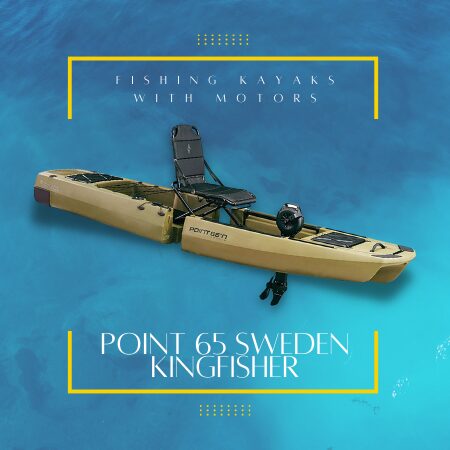
The Point 65 Sweden Kingfisher is the most unusual kayak in this list because of its modular build. Instead of dealing with one long hull every time you load, store, or carry it, the Kingfisher breaks into sections. That is a major advantage for anglers who do not have a truck, garage space, or a second person available at every launch.
The official Point 65 specifications list the solo Kingfisher at 11 feet long, 31 inches wide, about 70 pounds, and with a solo capacity of about 287 pounds. That capacity number matters.
Once you add an angler, motor, battery, rods, tackle, water, safety gear, and a small cooler, the remaining margin can disappear quickly.
The trimaran-style hull is the main reason this kayak belongs in a fishing conversation. It gives the boat a stable platform without turning it into an oversized barge.
You still get a narrower profile than many wide fishing kayaks, but the side hulls help the boat feel calmer when you shift weight, cast, or reach for gear.
The Kingfisher makes the most sense for anglers who value storage and transport as much as time on the water. It is not the highest-capacity option here, and heavier anglers or gear-heavy setups should do the math before choosing it.
For apartment storage, smaller cars, and solo transport, though, the modular design solves a problem many fishing kayaks ignore.
For motor use, check the exact package and mount included with the seller listing. Some Kingfisher versions are sold with pedal-drive systems or motor-ready options, while others may require separate accessories. Do not assume the motor, battery, or mount is included unless the product page clearly says so.
- Modular design is easier to store and transport
- Trimaran hull gives useful stability for fishing
- Good fit for anglers with limited garage or vehicle space
- Lower capacity than some larger fishing kayaks
- Motor package details must be checked carefully before buying
The Kingfisher is best for the angler who wants a serious fishing kayak but cannot deal with the storage and transport problems that come with many full-size rigs. It is stable, easy to break down, and practical for solo handling.
The main caution is capacity. If your fishing days involve heavy batteries, multiple rods, electronics, and a lot of tackle, compare the total loaded weight before deciding.
2. Reel Yaks Fishing Kayak – Motorized Kayak
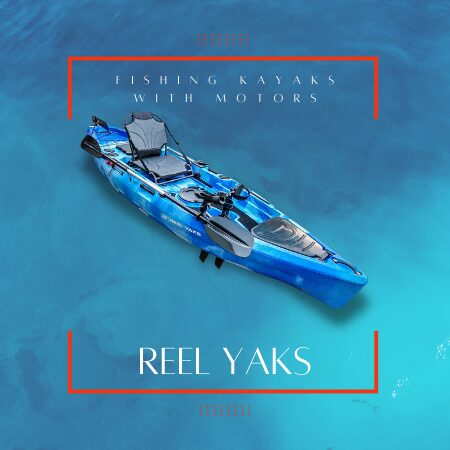
Reel Yaks is a better fit for anglers who want a compact fishing kayak that can be easier to move and store than a traditional full-length fishing platform. The brand leans heavily into modular kayak designs, which makes sense for people who live in apartments, drive smaller vehicles, or do not want to lift a long kayak onto roof racks after a full day on the water.
The big draw is the combination of hands-free movement and a fishing-focused deck. A pedal or motorized setup lets you hold position, move along a bank, or reposition without constantly putting the rod down.
That is especially useful when fishing around structure, weed lines, docks, shallow flats, or small lakes where repeated short moves are part of the day.
View this post on Instagram
The W-shaped hull is the detail most buyers should pay attention to. A wider, more stable hull helps when casting, reaching for tackle, or standing briefly in calm water.
It can also add drag, so do not expect a compact fishing kayak to feel like a fast touring boat. The tradeoff is simple: more stability and deck confidence, less speed and glide.
The seating setup is another practical advantage. A breathable frame-style seat makes a long fishing session easier, especially in warm weather.
Cheap low seats become uncomfortable quickly and keep you sitting in water. A raised, supportive seat is one of those features that sounds small until you spend five hours fishing from the same position.
- Modular format can be easier to transport and store
- Stable hull works well for fishing in calm or moderate water
- Comfortable seating position for longer fishing sessions
- Motor or mount setup may require installation
- Not the best choice for rough open water
The Reel Yaks option is a smart choice for anglers who want convenience first. It is not the kayak for someone chasing big offshore conditions or maximum speed.
It is better for lakes, slow rivers, protected bays, and smaller fishing spots where stability, transport, and hands-free movement matter more than distance performance.
Before buying, confirm what comes in the box. Some listings may include motorized bundles, while others focus on pedal drive or motor-ready layouts. Check for battery requirements, mount type, total weight, warranty terms, and whether the kayak sections fit your vehicle.
3. Wilderness Systems ATAK 120 – Fishing Kayak With Trolling Motor
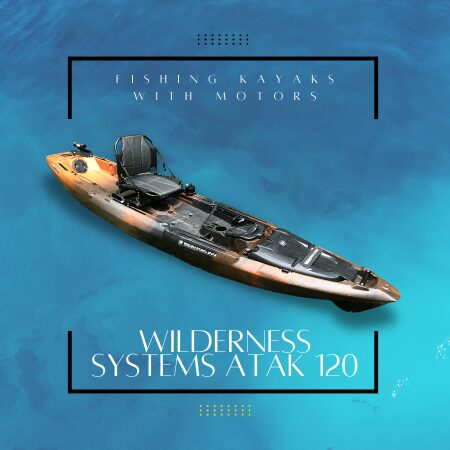
The Wilderness Systems ATAK 120 is the most serious fishing platform in this list. It is not the easiest kayak to move around off the water, but once it is rigged and launched, it gives anglers the kind of open deck, stability, storage, and accessory space that makes motorized kayak fishing feel organized instead of cramped.
The ATAK name stands for Advanced Tactical Angling Kayak, and the design shows that focus. The deck is open, the seat is adjustable, the hull is built for stability, and the Flex Pod area can support electronics or motor-drive setups depending on the configuration.
That makes it a better choice for anglers who already know they want a more complete rig.
Current ATAK 120 specifications commonly list the kayak at about 12 feet 3 inches long, 35 inches wide, 86 pounds, and with a maximum capacity of about 400 pounds. That gives it a stronger load margin than smaller compact kayaks, which is helpful once a motor, battery, fish finder, tackle box, crate, rods, and safety gear are added.
The ATAK 120 also makes better sense for anglers who care about electronics. The platform has been widely sold with features that support transducers, fish finders, accessory rails, and motor-drive compatibility.
That matters because a motorized kayak can become messy fast if the battery, cables, drive system, rods, and tackle do not have a clean place to go.
@reeldealgames Wilderness Systems ATAK 120 Rudder System. #fatmonkeyfishingcompany #kayak #fishing #wildernesssystems ♬ Wiggle (Onderkoffer Remix) – Jason Derulo & Snoop Dogg
The downside is weight and transport. An 86-pound kayak becomes more demanding once accessories are mounted. If you fish alone, think carefully about your launch spots, cart setup, storage space, and how you will load the kayak at the end of the day when you are tired.
- Stable, open fishing platform
- Good capacity for motor, battery, tackle, and electronics
- Better fit for experienced anglers building a complete rig
- Heavier and less convenient to transport alone
- Full motorized setup can become expensive
The ATAK 120 is the best option here for anglers who want a serious, motor-friendly fishing platform and do not mind dealing with more weight.
It is the wrong pick if you need something tiny, cheap, or easy to carry down a steep bank. It is the right pick if you want stability, rigging space, capacity, and a kayak that can grow with a more advanced fishing setup.
Best Fishing Kayaks With Motors – What To Consider?
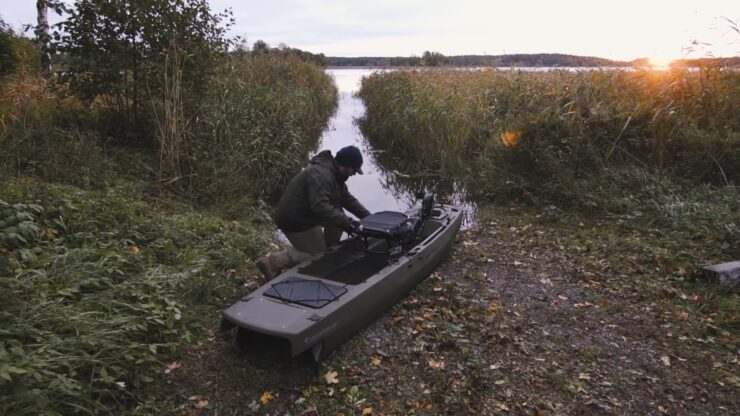
A motor can make kayak fishing easier, but it also adds weight, cost, wiring, battery management, and legal questions. A good motorized kayak setup should feel controlled, balanced, and safe. If the motor makes the kayak harder to launch, harder to steer, or awkward to fish from, it is not an upgrade.
Before choosing a kayak, think about where you actually fish. A small lake setup does not need the same hull, battery, or motor as a saltwater bay setup. A kayak used near ramps is easier to manage than one carried across sand, rocks, or muddy banks.
1. Motor Setup
The motor setup is the first thing to check because it affects everything else. A stern-mounted trolling motor, a pod-style motor, and a factory motor-drive system all feel different on the water.
A simple trolling motor can be cheaper and easier to replace, but it may require a mount, wiring, steering solution, and battery placement. A factory drive system can feel cleaner, but it usually costs more and may lock you into specific parts.
Most kayak anglers use electric motors rather than gas motors. Electric motors are quieter, easier to control at low speed, and better suited for small fishing spots. They still need the right battery.
A 12-volt setup is common, but battery capacity matters as much as voltage. Longer trips require more amp-hours, not just more optimism.
Battery placement is not a small detail. The battery should sit low, dry, secure, and balanced. A loose battery is dangerous, and a poorly placed battery can make the kayak trim badly or feel unstable.
2. Build Quality
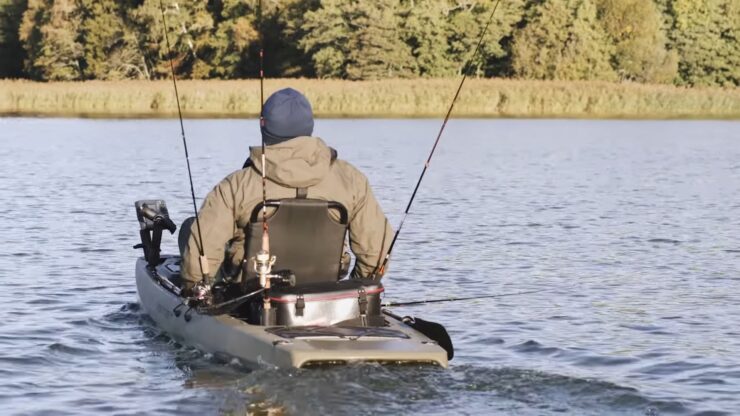
Most fishing kayaks use polyethylene because it handles bumps, dragging, transport, and repeated launches better than many lighter materials. That does not mean every plastic kayak is equal.
Hull thickness, deck layout, scupper design, seat mounts, handles, and hardware all affect how the kayak holds up over time.
For a motorized kayak, build quality matters even more because the boat is dealing with extra torque, extra weight, and more hardware. Look closely at the motor mount area, rudder system, accessory rails, seat frame, and storage hatches. Those are the places where cheap kayaks usually show their limits first.
Also think about UV exposure. Kayaks spend a lot of time in direct sun, and UV radiations can weaken materials over time. Store the kayak covered or indoors when possible, and rinse hardware after saltwater use.
3. Size
Size is not only about length. Width, hull shape, deck height, and weight capacity all matter. A longer kayak usually tracks better and carries more gear. A wider kayak usually feels more stable.
A shorter kayak is easier to store and transport. There is always a tradeoff.
For motorized fishing, do not buy only for the dry weight of the kayak. Add your body weight, motor, battery, rods, tackle, anchor, food, water, safety gear, and anything else you bring.
Then compare that number with the stated capacity. Staying well below maximum capacity usually gives a better ride.
If you need easy transport, modular kayaks like the Point 65 Kingfisher or some Reel Yaks models can help. If you need a larger fishing deck and more rigging space, the ATAK 120 makes more sense, but it will require a better loading and launching plan.
4. Stability and Standing Room
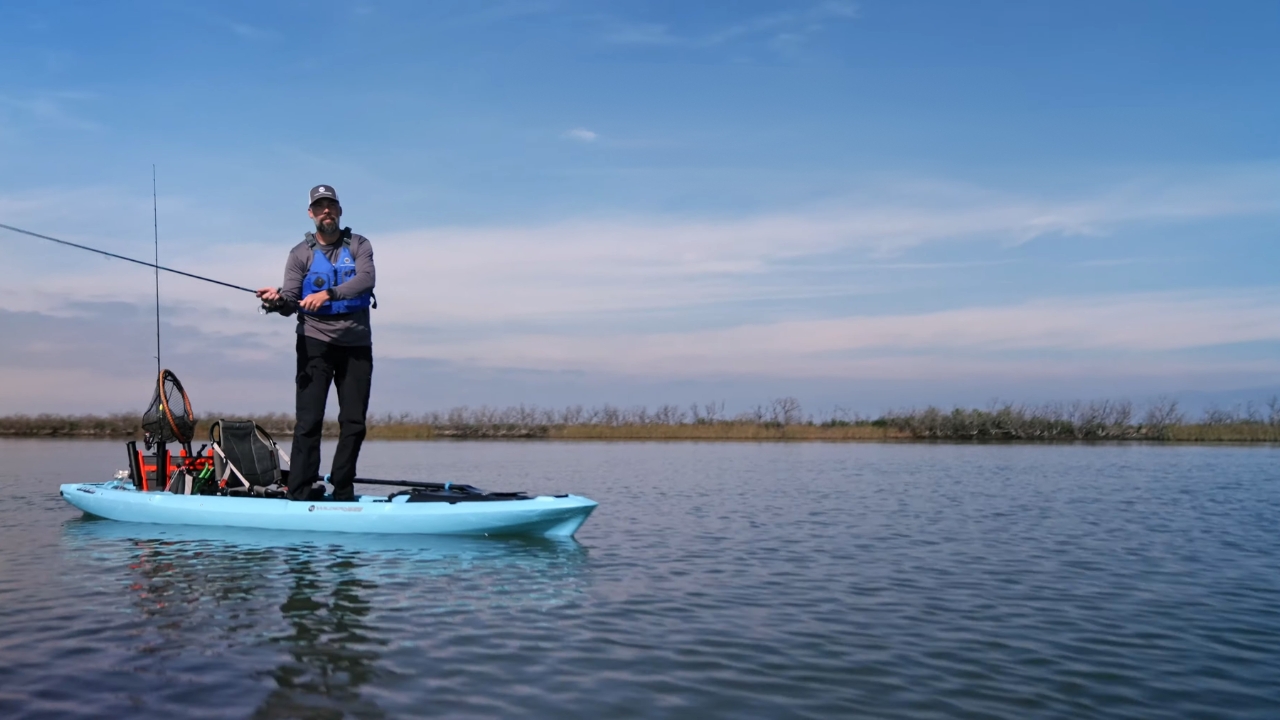
Fishing kayaks are often marketed as stable, but there are two different kinds of stability. Primary stability is how steady the kayak feels when flat on calm water. Secondary stability is how well it handles leaning and uneven movement.
For fishing, both matter. You need the boat to feel calm while casting, but you also need it to recover when you reach for a rod, land a fish, or shift weight. Motorized kayaks add another factor because the motor can push the hull from the stern or pod area, changing how the kayak responds.
If you plan to stand and fish, choose a kayak with a wide standing deck, grippy floor, and enough capacity. If you mostly sit, comfort and deck organization may matter more than stand-up stability.
5. Saltwater vs Freshwater Use
If you fish in saltwater, choose hardware and motors that can handle corrosion. Rinse the kayak, motor, drive, rails, and hardware after every saltwater trip. Salt does not care how expensive the kayak is.
Freshwater anglers can usually get by with simpler setups, but weeds, mud, stumps, and shallow water still matter. A motor that works well in open water can become frustrating in heavy vegetation or rocky shallows.
6. Transport and Launching
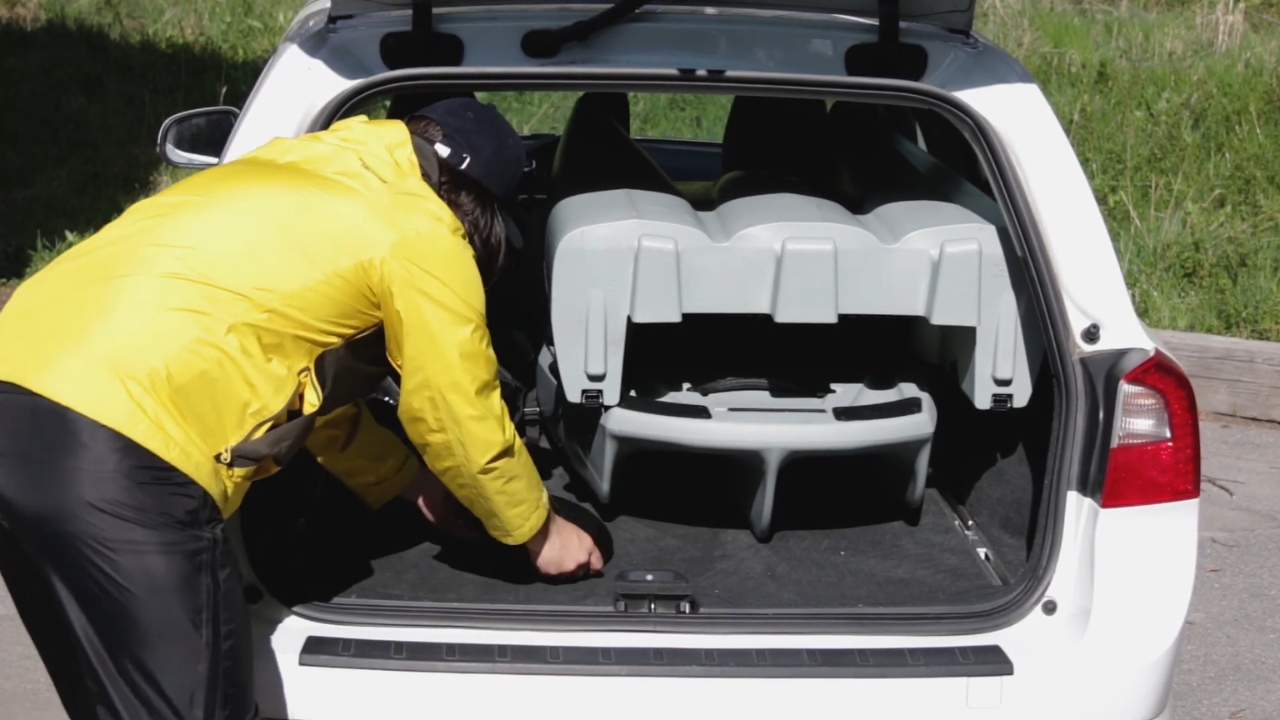
This is where many buyers make the wrong choice. A kayak that looks perfect online can become a problem if it is too heavy to load, too wide for your rack, or too awkward to wheel to the launch.
Before buying, decide how the kayak will move from storage to vehicle, from vehicle to water, and back again. A good kayak cart is not optional for many motorized setups. It can be the difference between fishing more and leaving the kayak at home.
FAQ
Conclusion
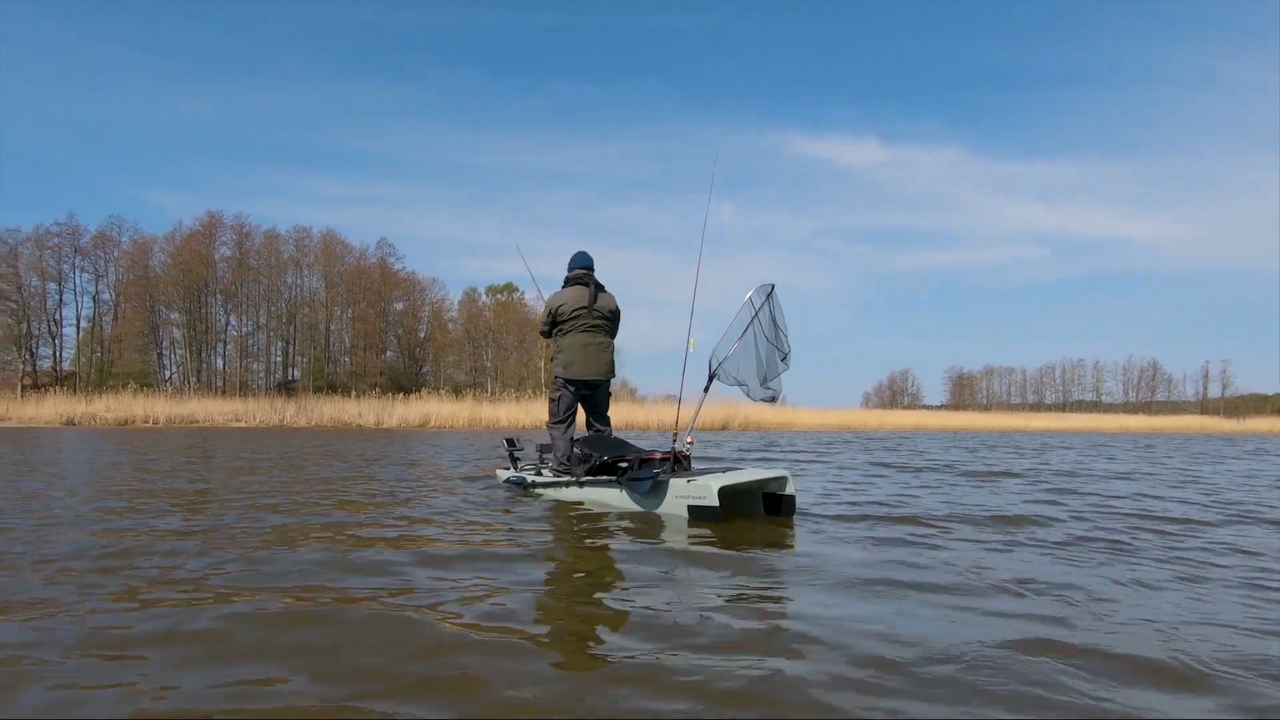
The best fishing kayak with a motor is the one that matches your water, your storage space, and the amount of gear you actually carry. Do not buy only for the motor.
Buy for the whole system: hull, seat, deck, capacity, battery placement, transport, and how easy it is to fish from once everything is loaded.
The Point 65 Sweden Kingfisher is the best fit for anglers who need modular storage and transport. The Reel Yaks option works well for compact, stable fishing in calmer water.
The Wilderness Systems ATAK 120 is the strongest pick for anglers who want a larger, more complete fishing platform with room for electronics, accessories, and a serious motor-ready setup.
If I had to choose one for a fully rigged fishing setup, I would start with the Wilderness Systems ATAK 120 because it gives the best mix of stability, deck space, capacity, and rigging potential. For smaller spaces and easier transport, the Kingfisher or Reel Yaks designs are more practical.
Whichever kayak you choose, test the setup close to shore before taking it on longer trips. Load it with the same gear you plan to fish with, check the battery position, test steering, and practice stopping. A motor should make the day easier, not turn the kayak into a floating project.

Meet Maria Alexander, the fearless adventurer steering the ship at KayakPaddling.net. Her mission? To convince you that life’s too short for dry land and that the best stories always start with “So there I was in my kayak…”