
Kayaking is widely recognized as an excellent, rewarding form of exercise, where the physical effort of paddling is part of the appeal. However, relying solely on human power has its limitations, especially for specific activities like fishing or photography.
For anglers and photographers, managing a paddle while trying to handle a rod or a camera is inefficient. Constantly correcting for drift takes focus away from the task at hand.
This is why many choose to upgrade their setup. By attaching a trolling motor to the stern, you can free up your hands completely. This allows you to navigate effortlessly to your destination, hold your position in a current, and focus entirely on fishing or taking photos. Best of all, these motorized mounts are usually temporary, meaning you can easily remove the motor whenever you want to go back to a traditional paddle.
Top Rated Trolling Motors For Your Kayak
Trolling motors typically run on 12V rechargeable batteries and operate quietly, allowing you to move through the water without scaring off fish.
They provide a reliable speed boost and enough power to handle headwinds or currents.
Most models are lightweight, easy to operate, and require few, if any, permanent modifications to your kayak.
1. Torqeedo Ultralight 403 Trolling Motor – 1 HP
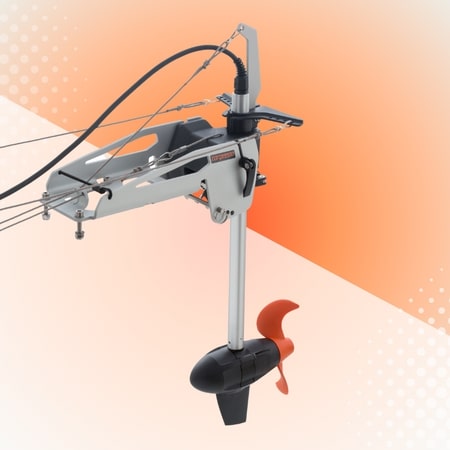
The Torqeedo Ultralight 403 is a premium, feature-heavy choice for serious anglers. Unlike standard options, this system includes an integrated battery, eliminating the need to buy and wire a separate power source. While it requires a significant upfront investment, its performance and build quality justify the premium price tag.
Key features:
- Weighs just under 20 pounds, including the rechargeable battery
- 66 pounds of thrust
- Top speed of 6 mph
- 24-mile range
- Universal mounting ball compatible with most kayaks
- Remote throttle for precise speed adjustment
- Onboard computer featuring GPS, real-time range calculation, and charger
The integrated battery charges quickly and offers enough capacity for extended, full-day trips. Because the entire unit is lightweight and compact, transport and installation are straightforward. It is expensive, but the premium components and built-in navigation tech explain the cost.
- High power-to-weight ratio with excellent top speed
- Exceptional battery range for long-distance travel
- Advanced onboard tech, including GPS and real-time range tracking
- Universal mounting system fits most kayak hulls
- Auto-tilt feature protects the propeller in shallow or rocky water
- Foot-controlled steering integration requires minor kayak modifications
- Integrated battery is difficult to service or replace independently if damaged
- High initial retail price
While the upfront cost of the Torqeedo Ultralight 403 is high, it delivers a dependable, low-maintenance setup with a 24-mile range. If you need a reliable, high-end motor with integrated GPS and reliable power, this unit is tough to beat.
2. Minn Kota Endura Transom Mount Trolling Motor
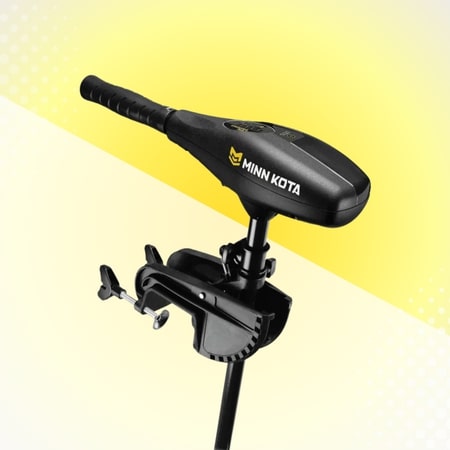
The Minn Kota Endura mounts directly onto most standard kayak transoms, making it easy to install or remove between trips.
Key features:
- 12V motor providing 30 lbs. of thrust
- 6-inch telescopic handle
- Twist-style speed controls
- Tiller steering mechanism
- Five forward and three reverse speeds
- Weighs 16 lbs.
- Composite propeller shaft
This motor operates quietly to avoid alerting fish, and its low amp draw prevents rapid battery depletion. The transom mounting system requires no complex tools or permanent alterations to the hull.
At 16 pounds, the unit is simple to transport. Higher output options exist, but this model remains one of the most cost-effective entry-level choices on the market.
- Straightforward operation
- Quick installation and removal
- Efficient power consumption preserves battery range
- Budget-friendly retail price
- Lightweight build simplifies transport
- Low operational noise level
- Fixed tiller angle without a tilt adjustment feature
For anglers seeking an affordable propulsion upgrade, this motor offers dependable performance without a massive investment. A separate 12V marine battery is required, but the low power requirements allow for a single, standard battery setup.
3. Newport Vessels Kayak Series Saltwater Electric Trolling Motor
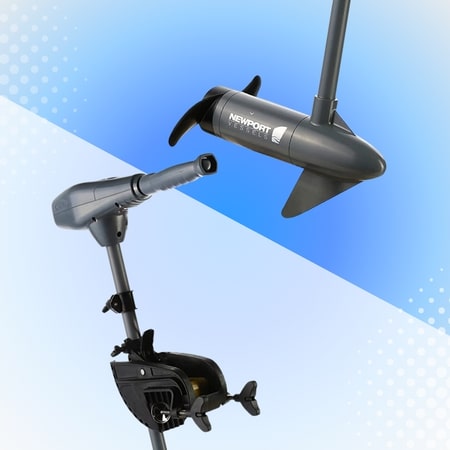
Higher thrust levels are valuable when navigating against heavy winds, strong tides, or fast currents. With 55 pounds of thrust, this Newport Vessels motor provides maximum power for a kayak platform, ensuring higher top speeds and better control in rough conditions.
Key features:
- Adjustable transom mounting bracket
- Telescopic handle with twist speed control
- 12V motor with 55 lbs. of thrust
- Five forward and three reverse speeds
- 5-point LED battery charge meter
- Directional steering lock mechanism
- Weighs 23 lbs.
- 4 mph maximum speed capability
- Reinforced fiberglass propeller blade
- Powder-coated hardware for saltwater corrosion resistance
The motor includes a practical tilt mechanism, allowing users to pivot the shaft completely out of the water to eliminate drag when paddling or navigating shallow flats.
The layout offers clean execution across installation, operation, and removal, balancing high performance with mid-tier pricing.
- Competitive pricing for the thrust output
- Quick transom attachment and removal
- Strong performance against headwinds and currents
- Corrosion-resistant components built for saltwater use
- 55 lbs. of thrust can overpower small or highly flexible hull designs
The integrated tilt function protects the prop during beach landings or shallow water launches—a feature frequently omitted on budget-focused alternatives. While 55 pounds of thrust exceeds the needs of lightweight kayaks, the multi-speed throttle allows users to dial back power as needed.
4. Newport Vessels Kayak Series 55lb Thrust
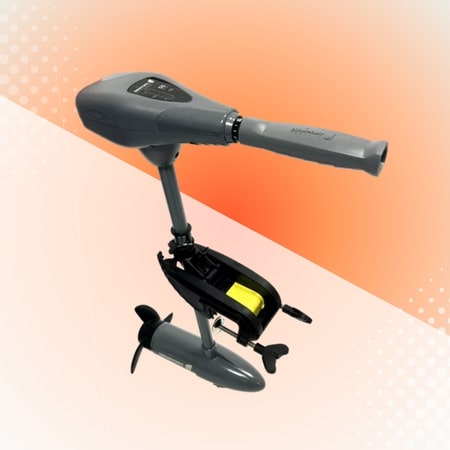
The Newport Vessels Kayak Series 55lb Thrust is a saltwater-rated option that balances raw power with quiet operation. It provides enough propulsion to handle heavy currents and windy conditions without producing excessive vibrational noise.
The motor features an adjustable 24-inch fiberglass shaft, which allows users to customize the depth placement depending on the draft of the kayak and water depth. With eight speeds total—five forward and three reverse—maintaining an exact trolling speed is straightforward. Additionally, the unit is equipped with 5-foot-6-inch battery cables, offering flexibility for battery placement to achieve proper weight distribution across the hull.
Features:
- 24-Inch Adjustable Fiberglass Shaft
- 8 Speeds (5 Forward & 3 Reverse)
- Saltwater Rated with Corrosion-Resistant Hardware
- Extra Long 5’6″ Battery Cables
- 55lb Thrust Power
- High 55lb thrust capacity
- Low operational noise
- Adjustable 24-inch shaft length
- Fine control with 8 speed options
- Full saltwater corrosion protection
- Top control head unit is not fully waterproof
- Relatively heavy dry weight at 23 pounds
5. MotorGuide 940700270 Xi3 Kayak Trolling Motor
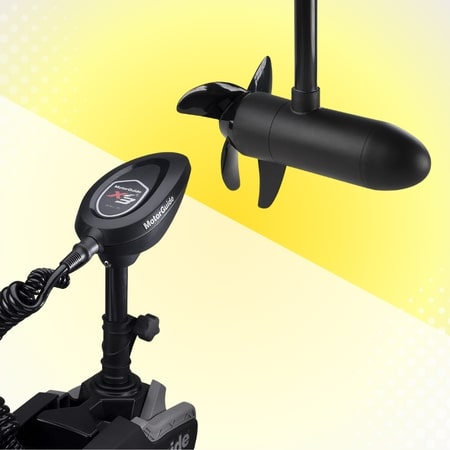
The MotorGuide Xi3 stands out in the kayak category due to its integration of wireless remote steering. Delivering 55 pounds of thrust via a 12V system, it removes the need for physical tiller steering handles or complex foot-pedal cable routing.
The mechanism for stowing and deploying the motor is highly efficient, minimizing physical effort when changing locations on the water. It also features a bright LED dashboard built into the base, which provides quick status updates on power levels and operational modes under direct sunlight. This specific model does not include built-in Pinpoint GPS from the factory, but the hardware is fully compatible with the Pinpoint GPS Gateway upgrade for users who want to add anchor mode and precision tracking later.
Features:
- Peak thrust: 55 lb
- Shaft length: 36″
- Max amp draw: 52A
- Voltage: 12V DC
- Digital variable forward speed control
- Wireless Remote steering
- 3-blade Machete propeller
- Compatible with Pinpoint GPS Gateway
- Made in the USA
- Material: Aluminum
- Strong 55lb propulsion capacity
- Hands-free wireless remote navigation
- Smooth, ergonomic stow and deploy system
- Highly visible LED indicators on the base
- Pinpoint GPS module requires a separate purchase
- High maximum amp draw (52A) requires high-capacity batteries
6. Minn Kota Endura C2 30 Freshwater Transom
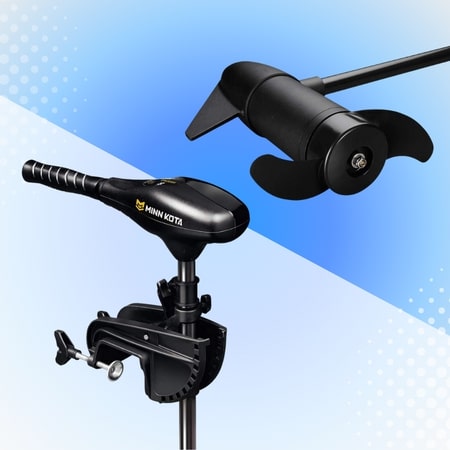
The Minn Kota Endura C2 30 is engineered for freshwater environments and focuses entirely on efficiency and low weight. It is an ideal addition for long days on the water when extending range matters more than achieving high top speeds.
Installation requires no modifications, and the lightweight chassis keeps transport simple. Operation is quiet, allowing users to move across shallow areas without generating substantial underwater noise. It uses a 6-inch telescopic handle for comfortable steering control, managing a motor head that features five forward and three reverse speeds.
The composite shaft is resilient against impact, though the fixed tiller design lacks a quick-tilt mechanism, requiring manual adjustment when entering thin water. Ultimately, the Minn Kota Endura C2 30 serves as a highly functional, utilitarian motor for entry-level setups.
Features:
- 12V motor with 30 lbs. of thrust
- 6-inch telescopic steering handle
- Five forward and three reverse speeds
- Impact-resistant composite shaft
- Simple installation and basic throttle setup
- Low operational noise output
- Lightweight, highly portable construction
- Reliable multi-speed gear configuration
- Lacks a quick tiller tilt adjustment function
How to Choose the Best Kayak Trolling Motor – 9 Tips
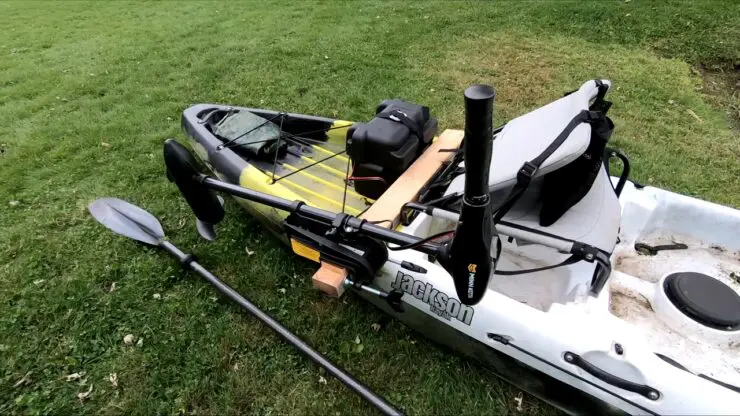
Because a trolling motor requires a notable financial investment, choosing hardware that matches your specific hull design and target environment is critical to avoid wasting resources.
Consider the following technical factors before choosing a model:
1. Power
Unlike gas outboards rated by horsepower, trolling motors are measured by pounds of thrust. As a baseline rule, a setup requires a minimum of 2 pounds of thrust for every 100 pounds of total weight (including the kayak, passenger, and gear).
Because most electric motors are scaled for small boats, they provide ample power for a kayak hull. However, excessive power can be inefficient. Target a range between 30 and 60 pounds of thrust; anything higher adds unnecessary weight and battery drain without a significant return in speed. (For reference, 1 HP translates to roughly 66.6 pounds of thrust).
2. Batteries
View this post on Instagram
Electric motors require dedicated marine batteries. Larger 24V propulsion systems require two separate 12V batteries wired in series, which adds significant weight. Due to the payload constraints of a kayak, a single-battery 12V system is generally preferred, as smaller motors optimize overall battery longevity and runtime.
Models featuring integrated LED battery voltage displays are highly useful for monitoring power consumption on long trips, preventing accidental battery depletion far from shore.
3. Mounting System
Most kayak electric setups utilize a transom mounting system fixed to the stern. These brackets adjust to clamp onto the rear deck securely, creating a stable platform for the motor pivot.
Bow-mounted configurations should generally be avoided for standard hulls, as they offer minimal performance advantages while negatively affecting steering tracking and weight distribution.
4. Shaft Length
Kayaks require shorter motor shafts compared to standard fishing boats because the mounting position sits low to the water line. Excessively long shafts create undue leverage, increase drag, and limit your ability to navigate shallow flats or launch from the shoreline.
Select a shaft length that keeps the propeller submerged roughly 12 inches below the water surface during normal loading.
5. Weight
@leoswensonHomemmade trolling motor setup on the new kayak already tested it out and found out i need a bigger battery source the drill batteries were a good idea but only get about 10 minutes out of each battery♬ Legends Are Made - Sam Tinnesz
Verify that the combined weight of the motor, mount, and marine battery does not exceed the maximum payload capacity specified by your kayak manufacturer. Overloading the stern lowers the freeboard and compromises secondary stability.
Opting for lighter, compact motor units simplifies both hull balancing and transport from your vehicle to the launch site.
6. Control Type
Hand-controlled tillers are highly practical for kayak layouts, allowing quick speed adjustments from the seat.
While manual tillers allow single-handed steering, foot-control systems offer completely hands-free tracking, though they require installing steering cables or foot pedals inside the cockpit.
7. Gears/Speeds
Most standard trolling motors use preset speed increments for forward and reverse tracking. Having access to multiple gear steps makes it easier to match your speed to changing crosswinds and tidal currents.
Entry-level options typically feature fewer speed steps, which can cause the kayak to move too quickly or slowly for proper lure presentation. Look for systems providing at least five forward and three reverse speeds for adequate flexibility.
8. Tilting vs. Non-Tilting Driveshaft
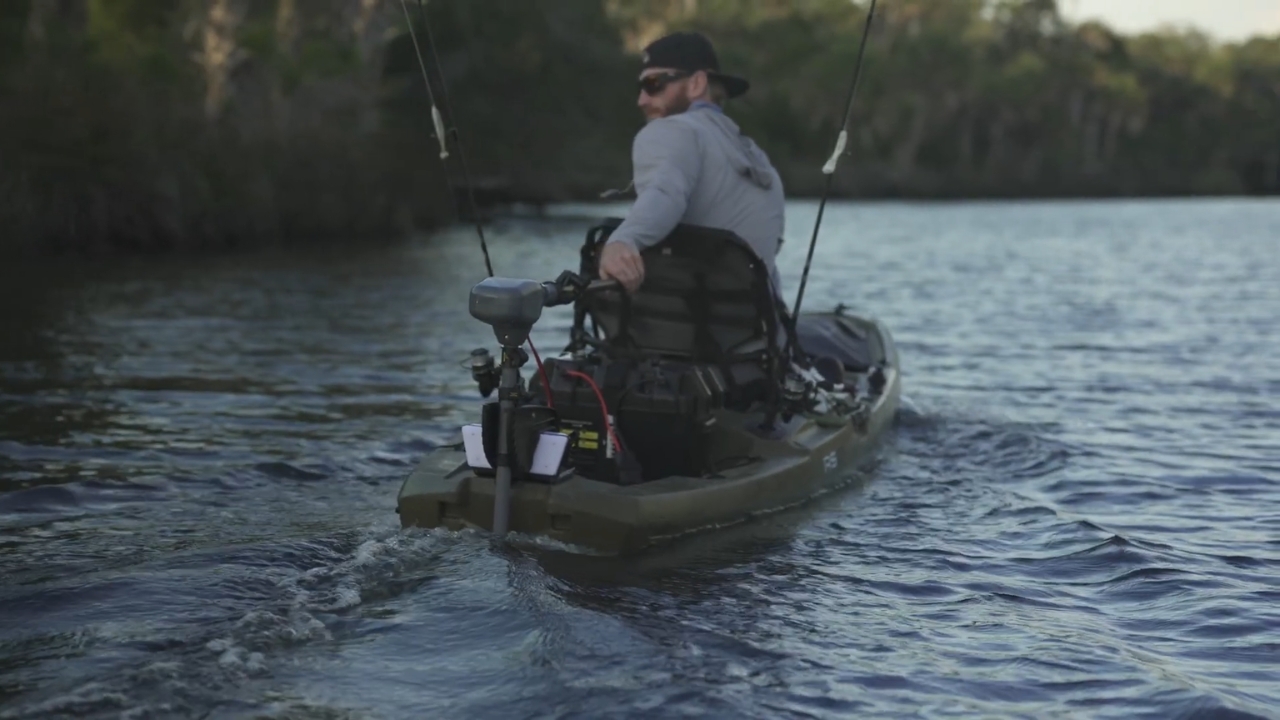
A non-tilting shaft remains permanently vertical, which is functional in open water but poses a substantial risk when navigating sandbars, logs, or rocky shorelines.
Conversely, a tilting drive shaft allows the user to pivot the lower unit up and lock it above the hull line, preventing propeller damage. Budget models often omit this feature, so factor your local launch conditions into the decision.
9. Budget
Set a clear budget before shopping, as electric setups range from cheap entry-level models to premium integrated systems costing significantly more.
Higher pricing does not automatically guarantee a better user experience; premium options often include complex digital telemetry or network features that may exceed basic recreational requirements.
Conclusion
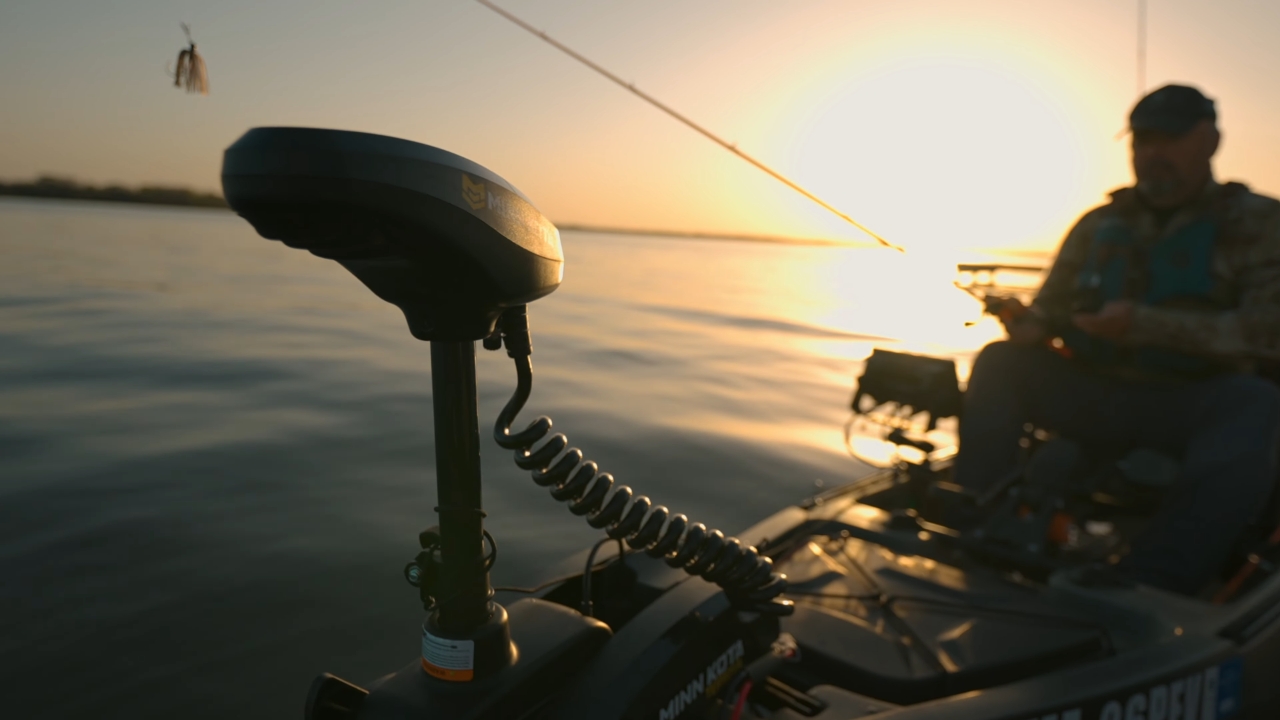
Integrating a trolling motor into a kayak setup expands range capabilities and provides hands-free position management, allowing anglers and photographers to cover more water without manual paddling exhaustion.
The low operational noise of electric propulsion is particularly valuable when navigating sensitive flats or approaching wildlife, as it avoids generating heavy pressure waves or mechanical vibration.
When configuring your kayak, verify proper hull fitment and ensure adequate storage space for the battery bank. Utilizing extended gauge wiring allows you to position heavy batteries forward in the cockpit to maintain optimal hull trim and tracking balance.
Be aware that adding motorized propulsion changes the rotational pivot and overall handling physics of the kayak, particularly when balancing throttle use with paddle corrections.
Even with high-end, reliable motors, mechanical or electrical faults can occur on the water. Always carry a standard paddle as an emergency backup to ensure you can return to shore safely if your battery or electronics fail.
Finally, remember that while lower drive units and shafts are completely sealed against moisture, the upper control heads often lack full waterproof ratings. Keep the top housing protected from breaking surf and heavy downpours to prevent short circuits.

Adelaide Gentry, a seasoned kayaking enthusiast and expert, is the driving force behind KayakPaddling.net. With over a decade of experience navigating the world’s most challenging waterways, Adelaide combines her passion for adventure with a deep knowledge of kayaking to provide insightful and practical guidance for paddlers of all levels.